Synchronous thermal plants
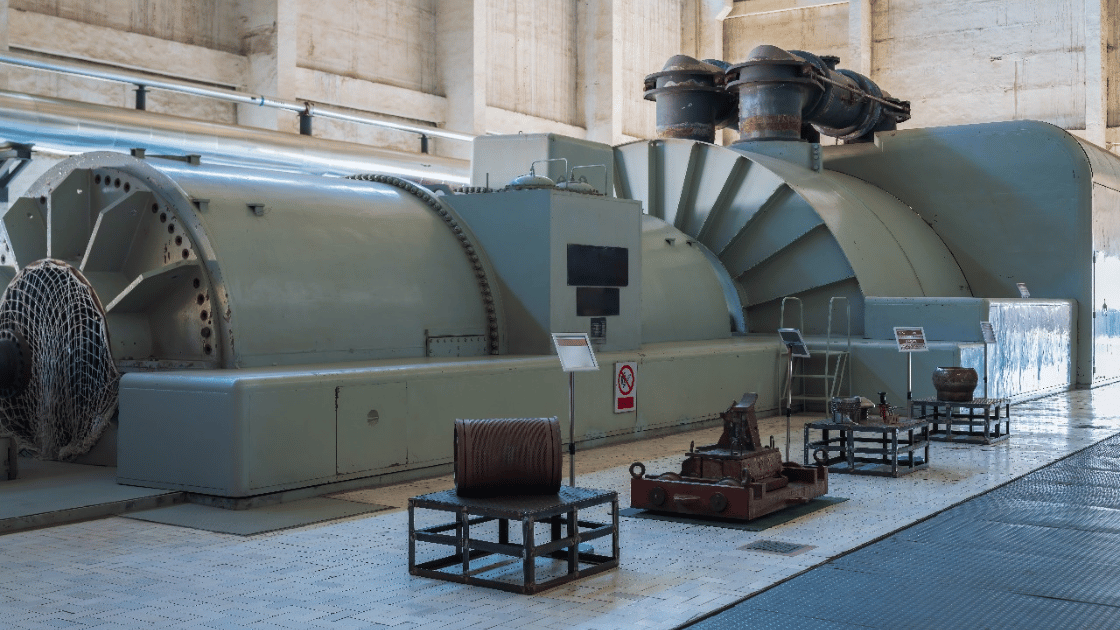
Coal, gas steam and biomass units: excitation and governor model verification, PRC-019 coordination, PRC-024 settings, PRC-025 load-responsive relays and PRC-005 maintenance.

Your Trusted Partner in Electrical Engineering and Power Systems
At Keentel Engineering, we deliver electrical power engineering services built on 30 years of experience and a commitment to excellence. Our clients include utilities, developers, EPCs, and public agencies across the U.S.
Unlike firms that sacrifice technical depth to chase billable hours, we prioritize precision, compliance, and value engineering. From transmission services and relay modeling to winterization and SCADA planning, we never compromise on quality.

At Keentel Engineering, we take pride in being the go-to electrical power engineering firm for power and utility system planning, substation design, protection, control, and power system analysis. The following attributes distinguish our team in utility-grade substation engineering and compliance-driven project delivery.
With three decades of hands-on project delivery, we bring unmatched expertise in substation layout design, substation electrical and civil engineering, relay protection, and grid-tie solutions. Our experience includes projects in complex terrain, urban retrofit environments, and utility-scale renewable integrations.
Our engineering process applies AutoCAD 3D, BIM modeling, and system-level substation design practices to ensure accurate planning, reduced errors, and efficient coordination across all project stakeholders.
Our workflow includes 3D substation design, enabling clash-free coordination between structural, electrical, and civil disciplines.
From grounding grid studies to relay protection settings, we engineer every detail to improve system reliability, performance, and operational safety. Our rigorous QA/QC process ensures compliance with IEEE, NFPA, and ISO/TSO interconnection standards.
Among leading electrical substation design companies, Keentel Engineering stands out for 30+ years of proven high-voltage and utility-grade project delivery.



First name, email and what you're interested in are all we need to get moving. Everything else, including drawings or an RFP, is optional.
The Generator Owner (GO) is the entity that owns and maintains generating Facilities. Its NERC obligations are largely about the equipment: how protection is set, coordinated and maintained; how the plant is modeled and verified; how its equipment is rated; and how it is prepared for extreme weather.
The Generator Operator (GOP) is the entity that operates those Facilities and performs the functions of supplying energy and reliability-related services. Its obligations are largely about operation: following voltage schedules and Operating Instructions, communicating with the Transmission Operator and Balancing Authority, reporting events, providing real-time data and training operating personnel.
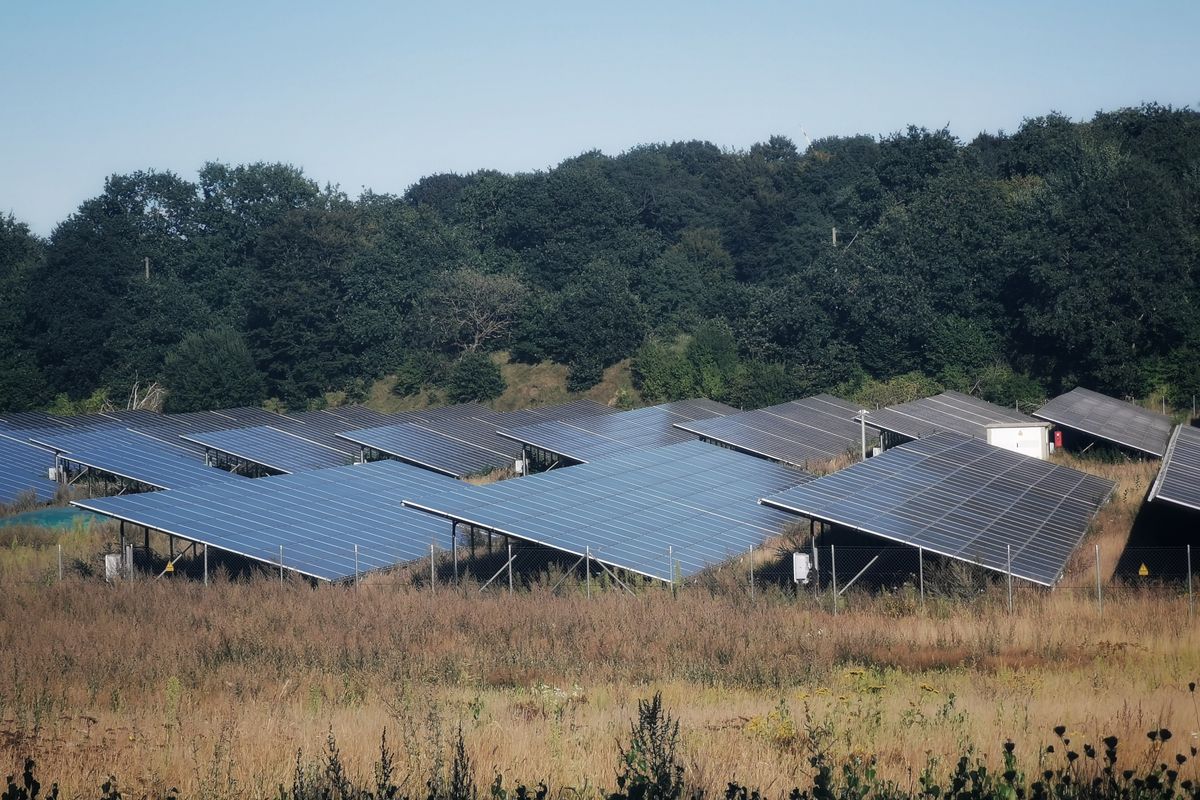
Many organizations hold both functions for the same plant. Others split them — an asset owner registered as GO while an affiliate or O&M provider is registered as GOP — or share them through a Joint Registration Organization (JRO) or Coordinated Functional Registration (CFR). Each arrangement changes who must produce which evidence, and every requirement needs a named owner.
Applicability varies with technology, size, interconnection voltage and registration category. Our programs are built around the specific plant, not a generic checklist.
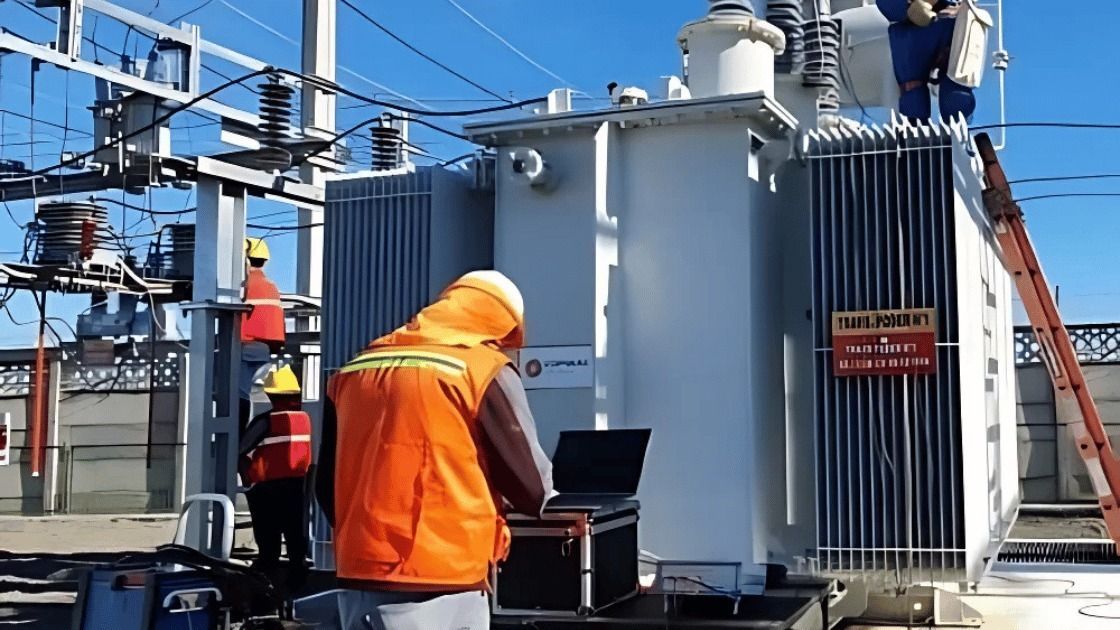
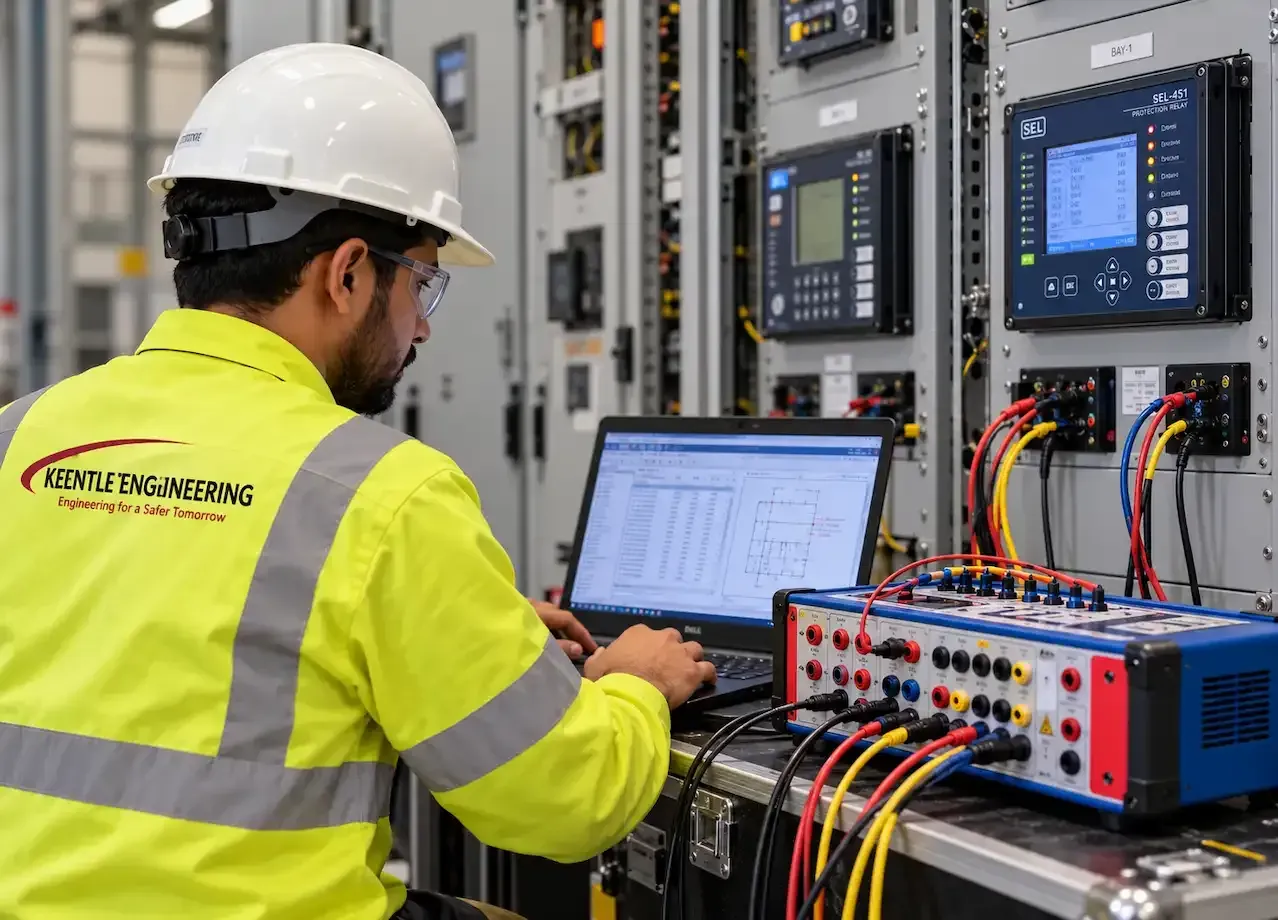
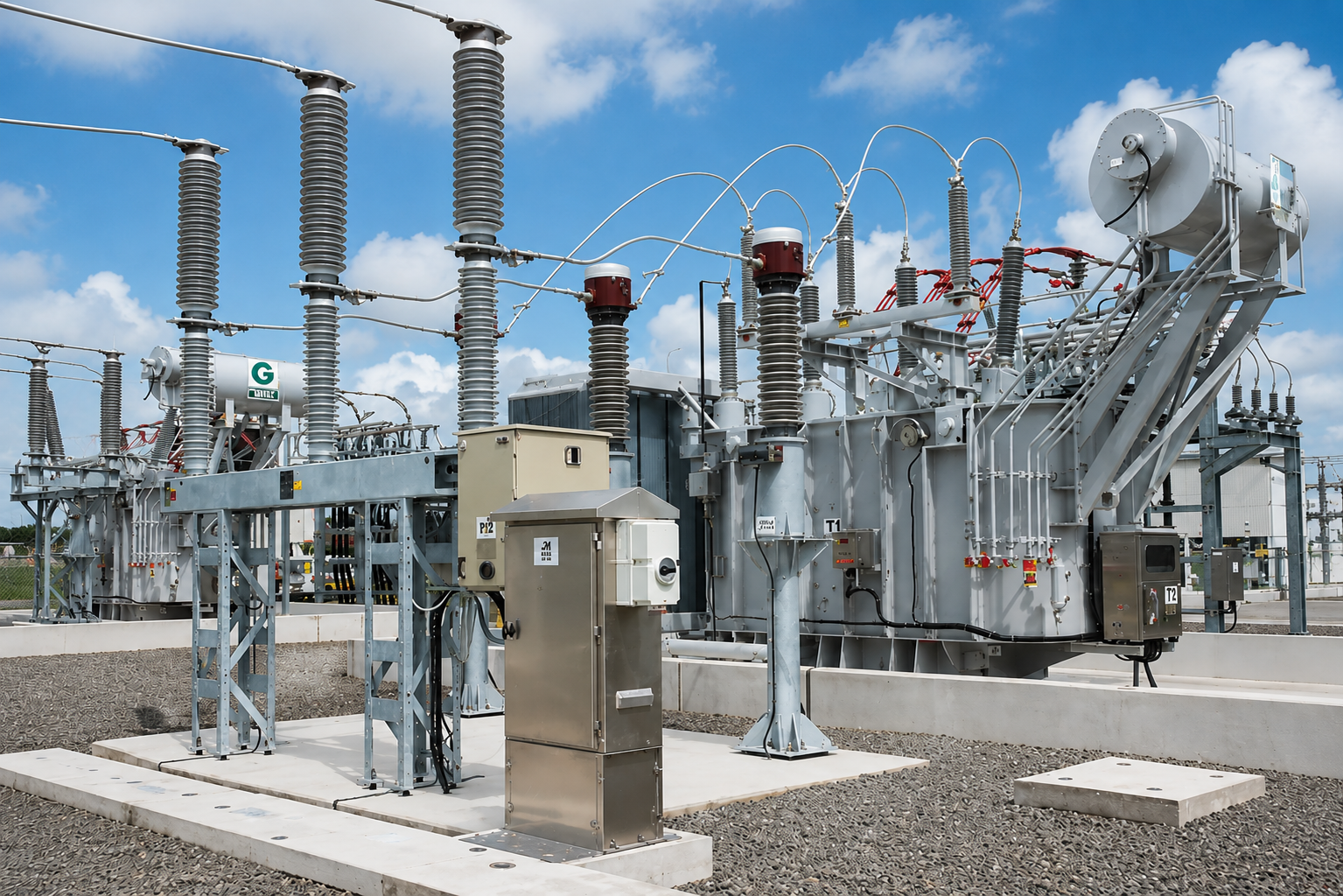
Coal, gas steam and biomass units: excitation and governor model verification, PRC-019 coordination, PRC-024 settings, PRC-025 load-responsive relays and PRC-005 maintenance.
Multi-unit CT/CCGT blocks with shared GSUs and auxiliaries: unit-by-unit capability testing, model verification, cold-weather preparedness and blackstart roles where designated.
Governor and excitation modeling, capability testing and protection coordination for conventional hydro and pumped-storage units operating in both modes.
Transmission-side engineering that supports interface coordination — switchyard protection, ratings, studies and data — where NUC-001 interface requirements apply. Plant nuclear-safety programs are outside our scope.
Inverter-based resources (IBRs): plant controller and inverter model verification, ride-through settings and performance, disturbance monitoring and EMT models.
Solar-plus-storage and wind-plus-storage facilities where aggregation, shared POI equipment and combined controls change applicability and modeling.
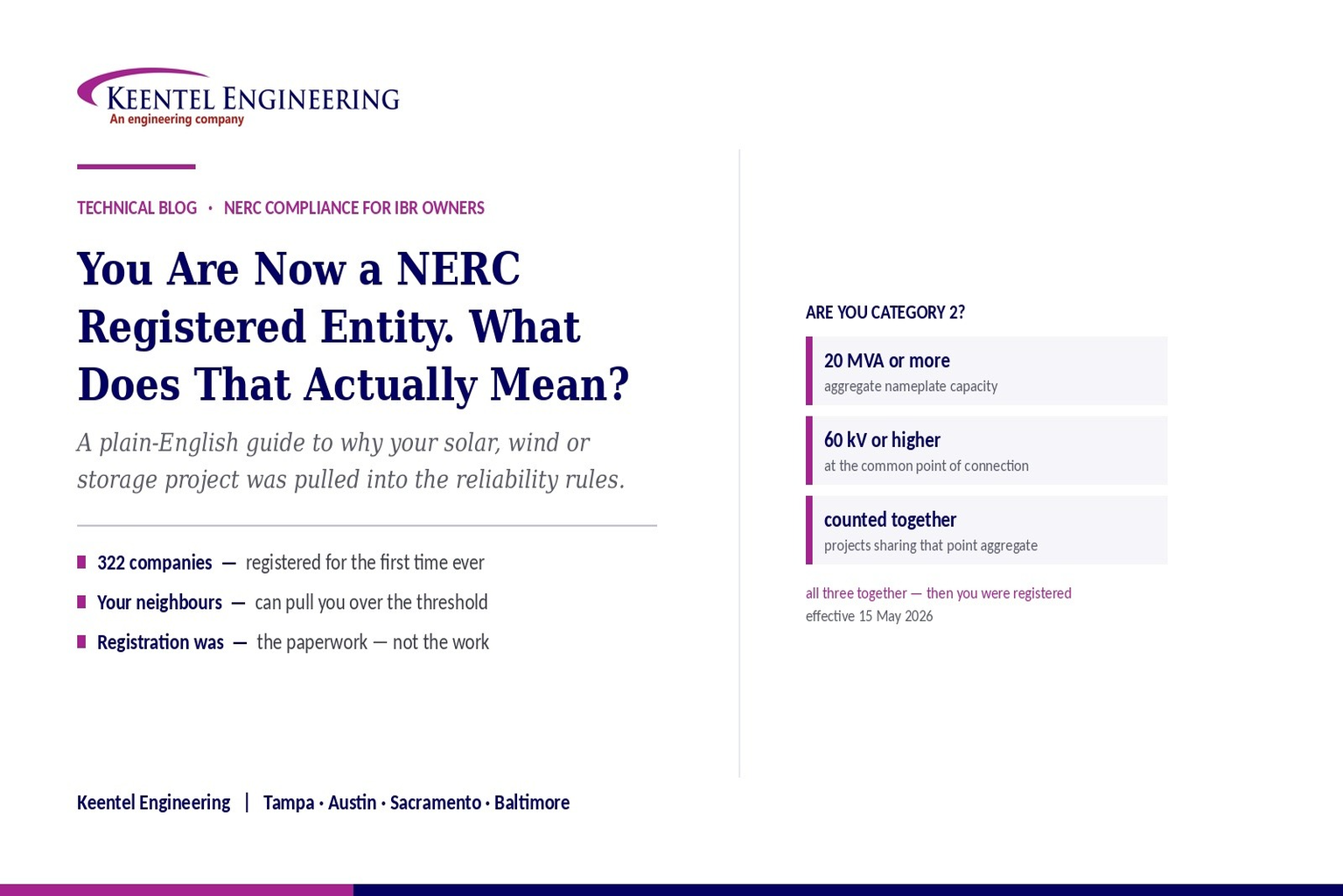
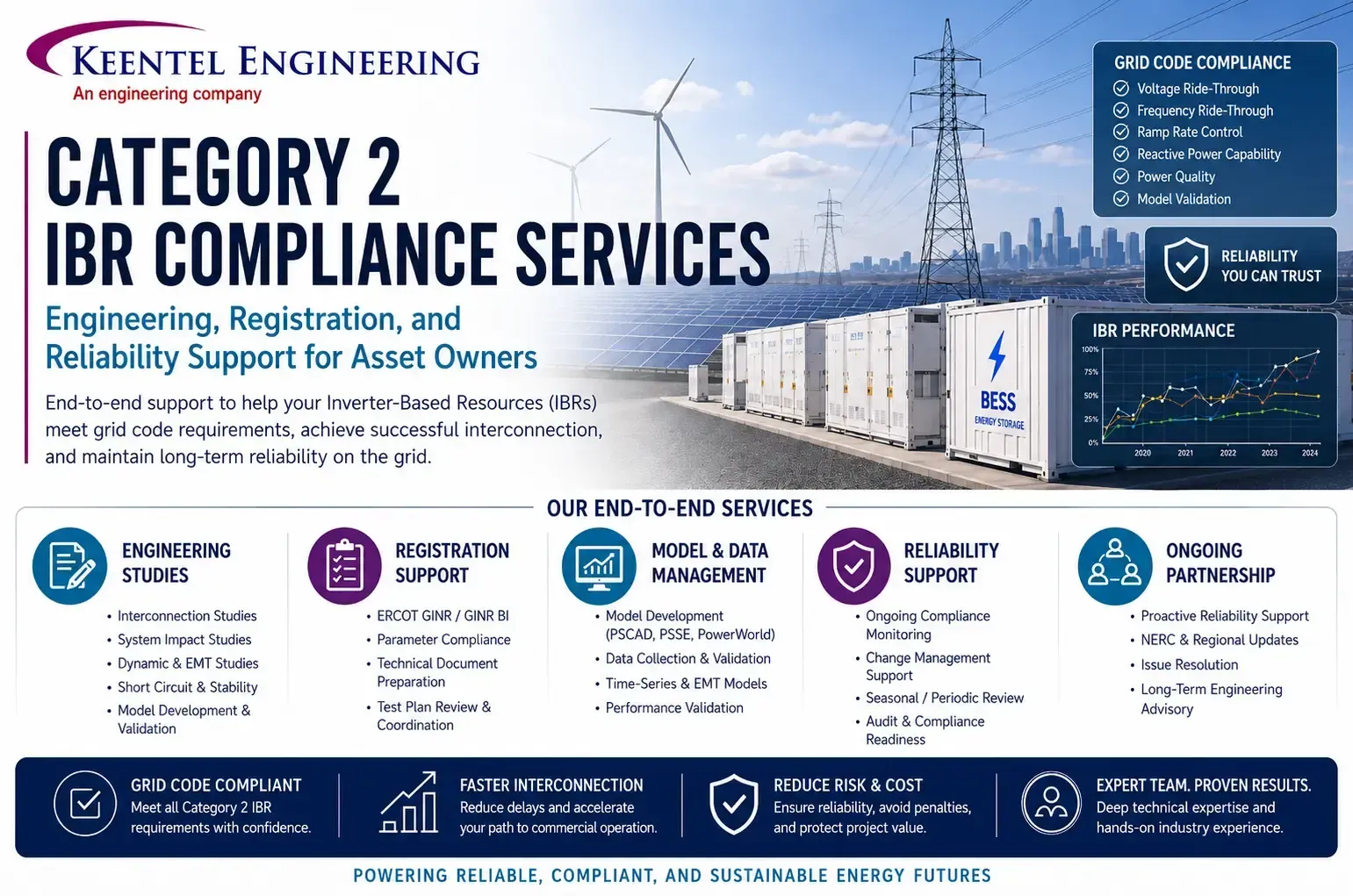
Non-BES IBRs of 20 MVA or more aggregate at 60 kV or higher now captured by the expanded registration criteria. See our IBR Category 2 page for the full phased program.
Generator owners also registered as TO (and sometimes TOP) for generator interconnection facilities, and portfolio owners with GO/GOP across several Regional Entities.
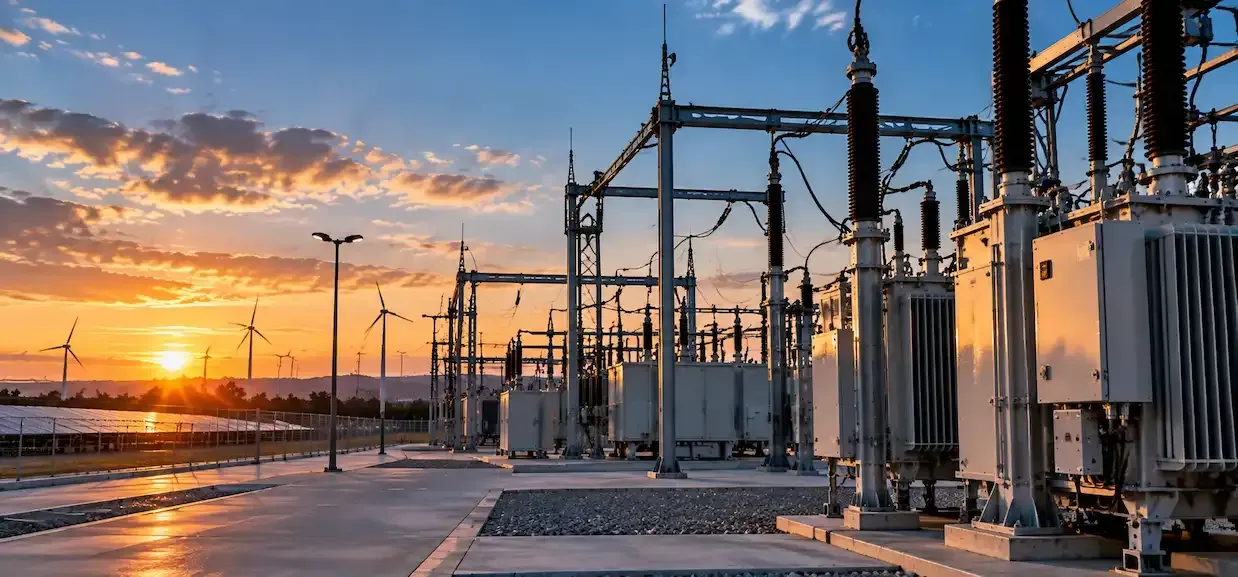
A generator that owns its gen-tie line, collector substation or POI switching station may have obligations beyond GO/GOP — and in some cases a TO or TOP registration. FERC Order No. 785 and the NERC registration criteria address when generator interconnection Facilities create TO/TOP obligations; the answer depends on configuration, ownership and use. Where they do, standards such as FAC-001, FAC-003 and TO requirements under the PRC family may apply to those Facilities.
We map each element — collector system, main power transformer, gen-tie, breakers and protection — to the function that owns it and the requirements that follow.
The 2026 CMEP Implementation Plan highlights the “aggregation of control”: unregistered third parties increasingly operate many Generator Owners’ facilities from common control centers. A shared operations desk can dispatch dozens of plants for different owners without itself being registered.
Contracting out operation does not move compliance responsibility. The registered GOP remains accountable for voltage-schedule compliance, communications, event reporting, data provision and training — so contracts, procedures and evidence ownership need to be explicit.
This table lists the Operations & Planning standards most commonly applicable to GO and GOP registrations and the engineering evidence that typically demonstrates compliance. Applicability depends on your facilities, technology, size, region and registration category, and several standards are phased in or have multiple versions in effect. Confirm current versions, effective dates and applicability for every facility — our registration and applicability assessment does exactly that.
| Standard | Function | What it addresses | Typical engineering evidence |
|---|---|---|---|
| PRC-002 | GO | Disturbance monitoring and reporting at BES buses and elements identified by the TO | Monitoring device inventory, recording capability, clock synchronization and data retention |
| PRC-004 | GO | Review of Protection System Misoperations and Corrective Action Plans | Operation reviews, misoperation identification, CAPs and completion records |
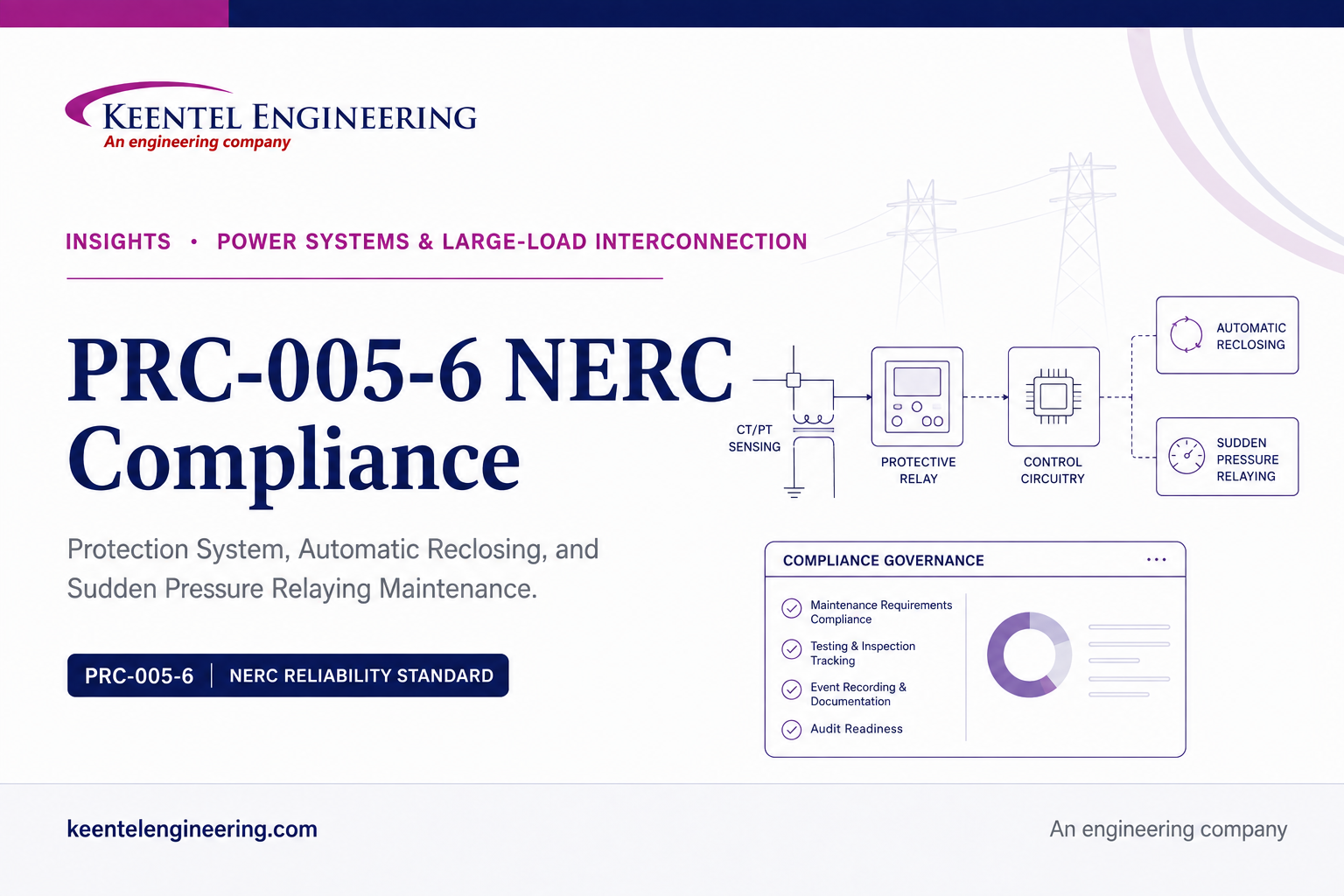
| PRC-005 | GO | Protection System, Automatic Reclosing and Sudden Pressure Relaying maintenance | Component inventory, maintenance intervals, test records and Unresolved Maintenance Issue tracking |
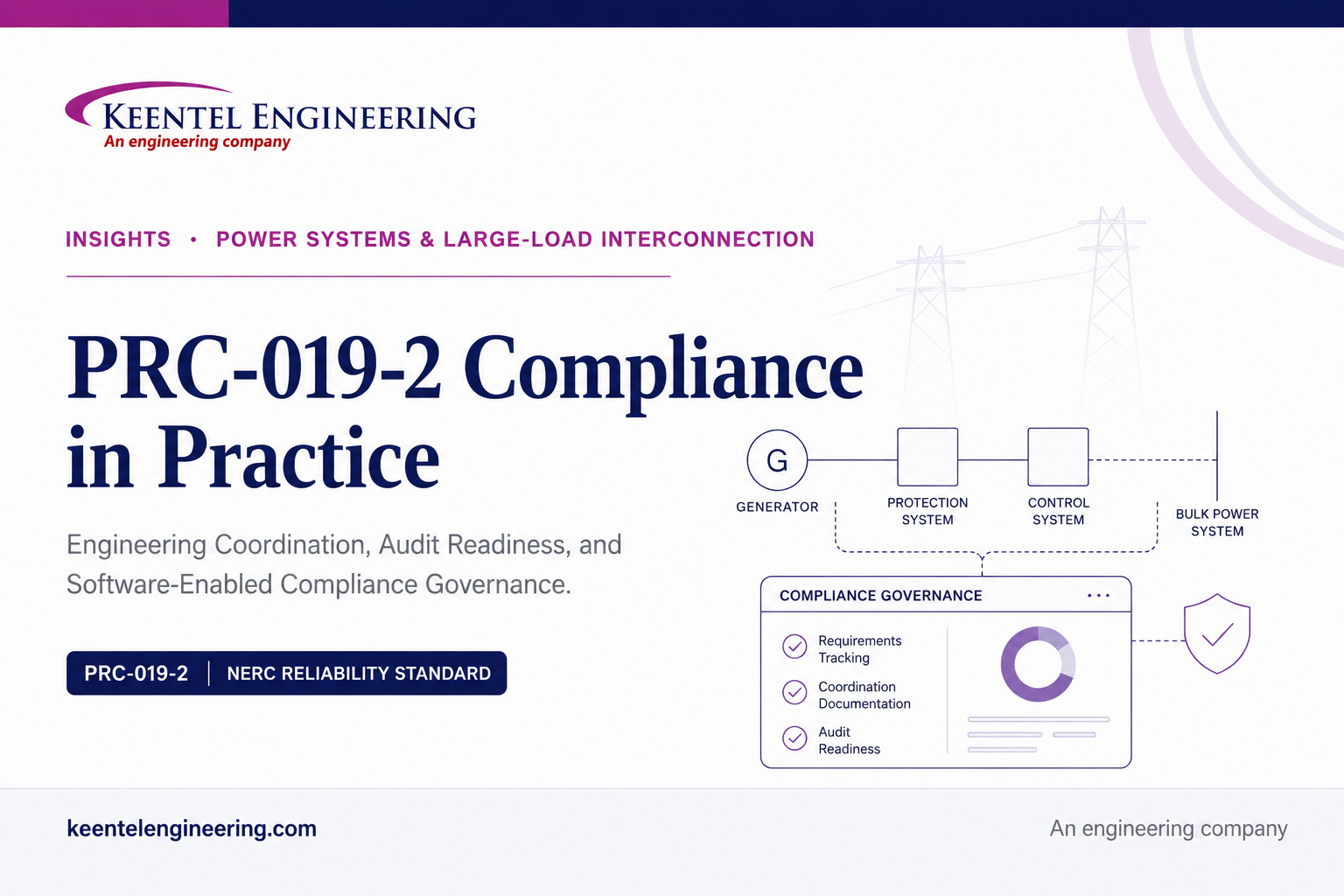
| PRC-019 | GO | Coordination of voltage regulating controls, limiters and protection with equipment capabilities | Coordination studies of AVR limiters, protection and capability curves |
| PRC-024 | GO | Generator frequency and voltage protective relay settings | Setting evaluations against the no-trip zones and documented equipment limitations |
| PRC-025 | GO | Generator relay loadability for load-responsive protective relays | Relay loadability calculations using the standard’s prescribed criteria |
| PRC-027 | GO | Coordination of Protection Systems for faults | Coordination process, short-circuit studies and periodic review records |
| PRC-028 | GO (IBR) | Disturbance monitoring equipment for inverter-based resources | Recording locations, data points, sampling capability and implementation plan status |
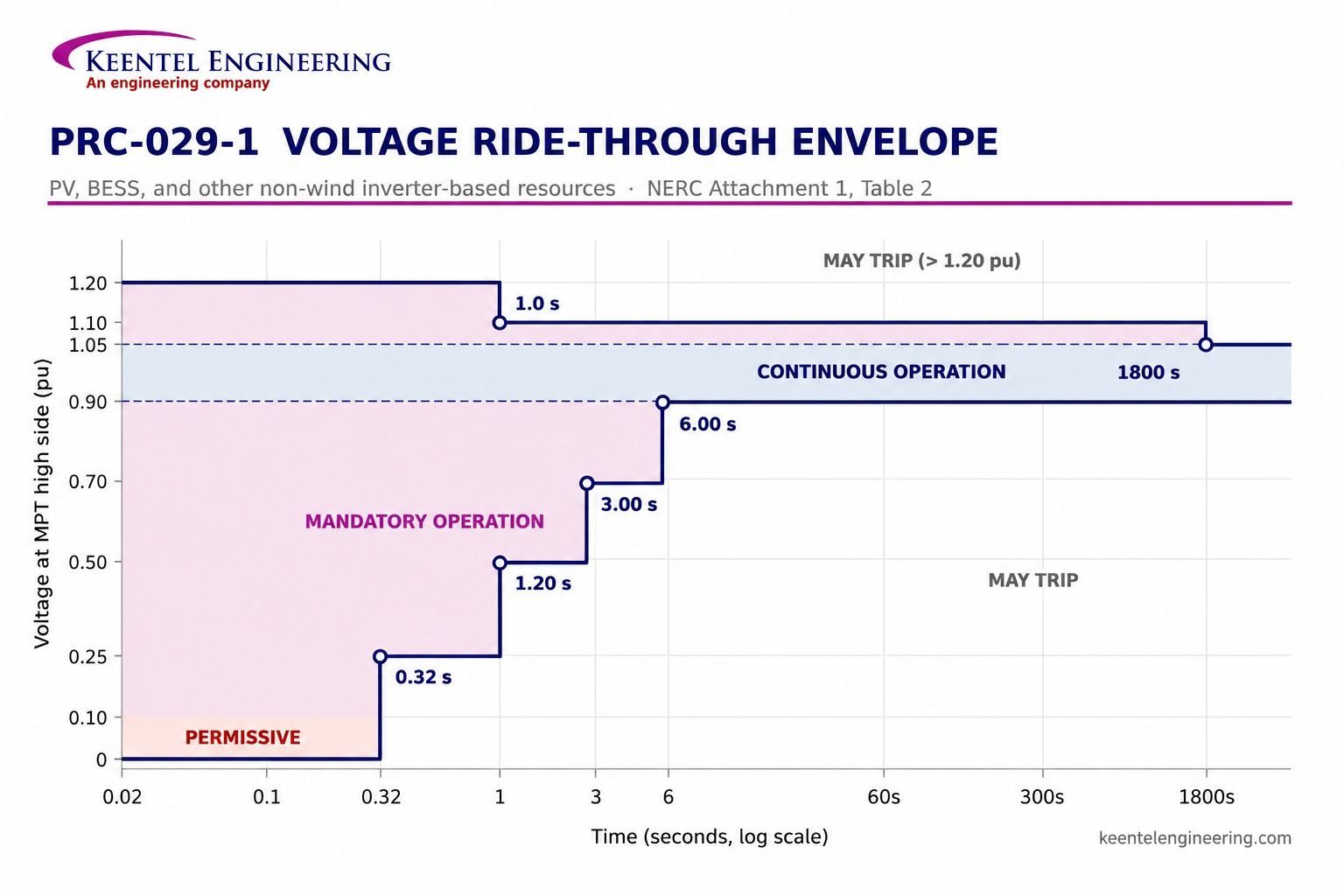
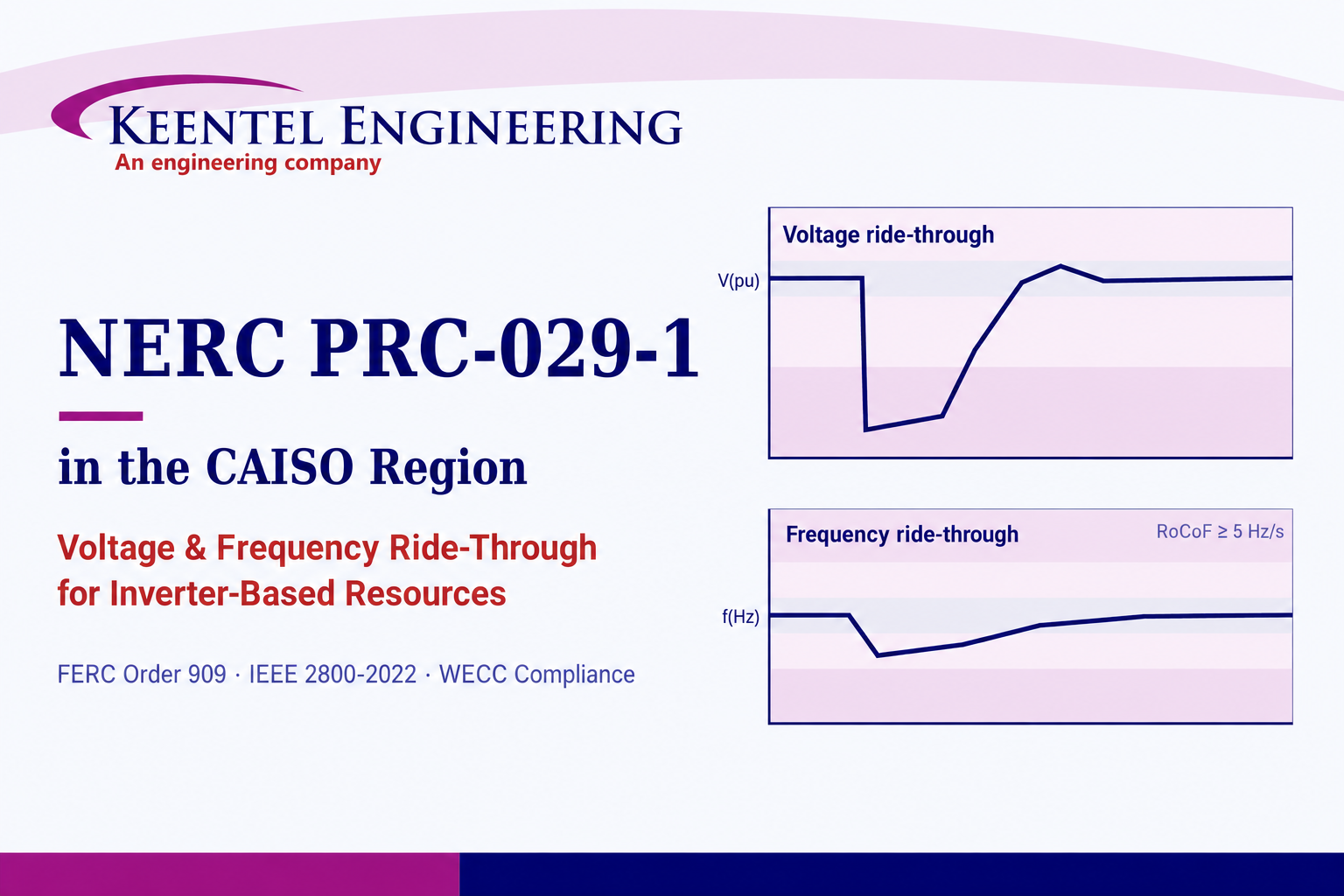
| PRC-029 | GO (IBR) | Frequency and voltage ride-through requirements for inverter-based resources | Ride-through capability documentation, settings and any documented equipment limitations |
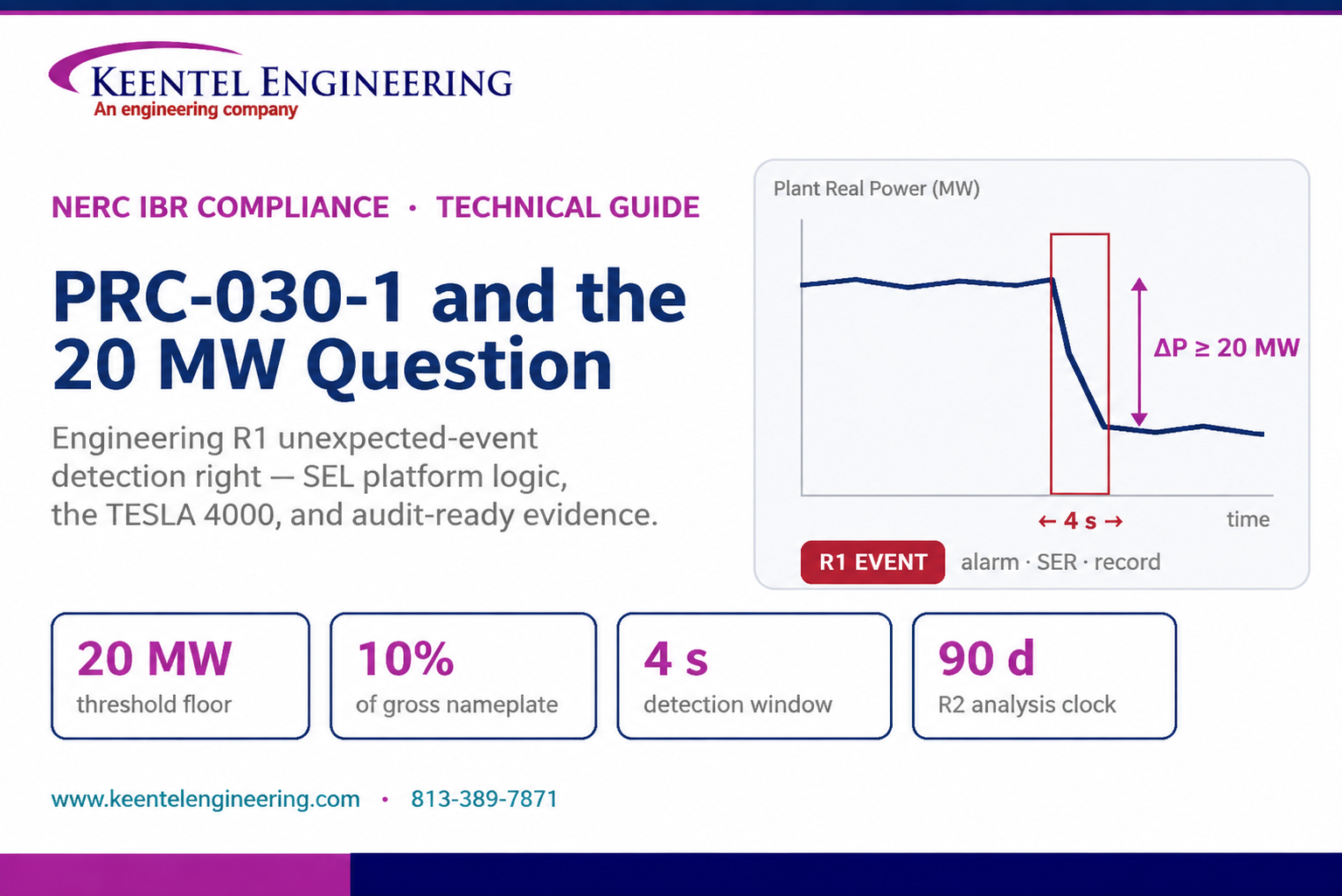
| PRC-030 | GO (IBR) | Analysis of unexpected IBR output reductions | Event identification, root-cause analysis and corrective actions |
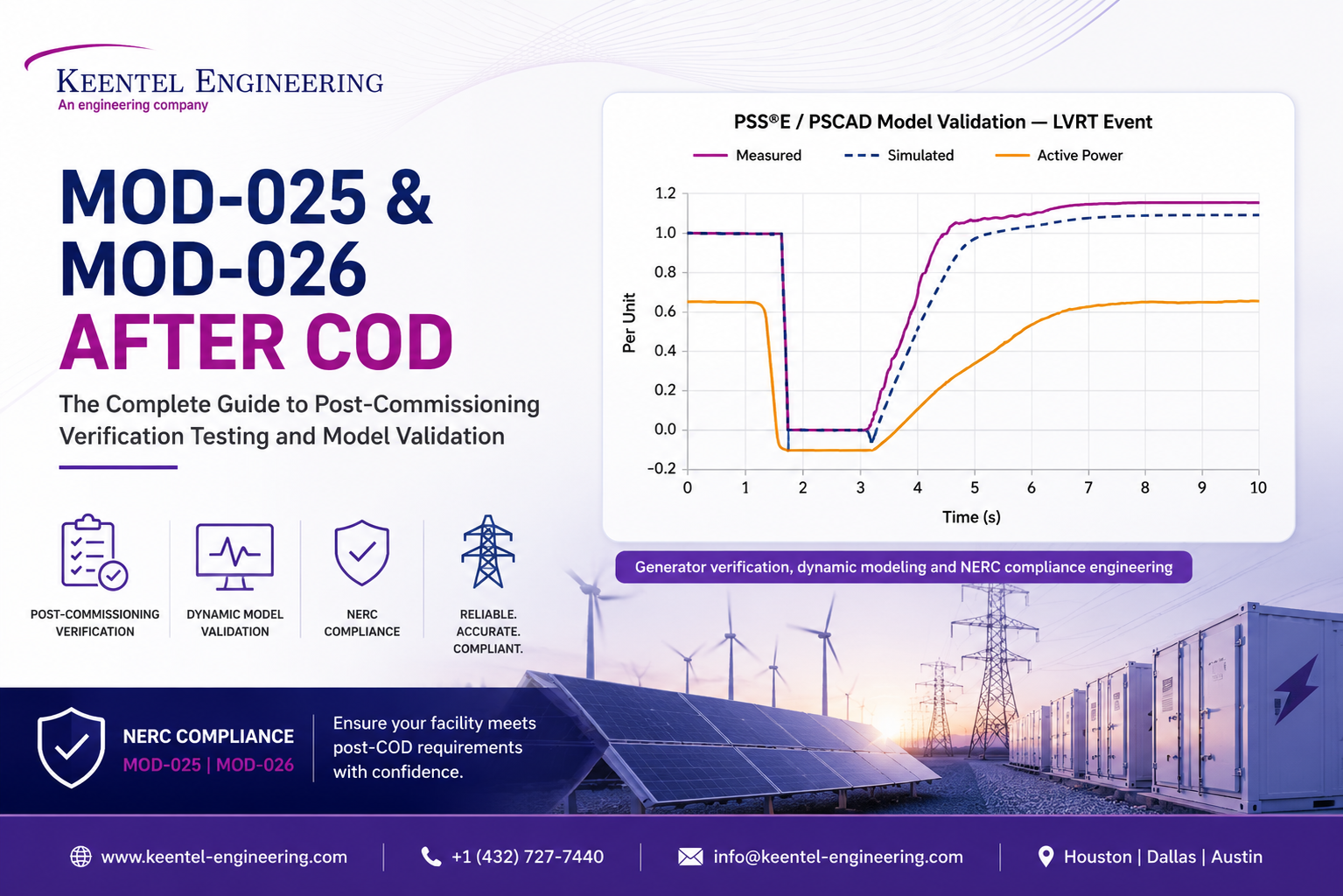
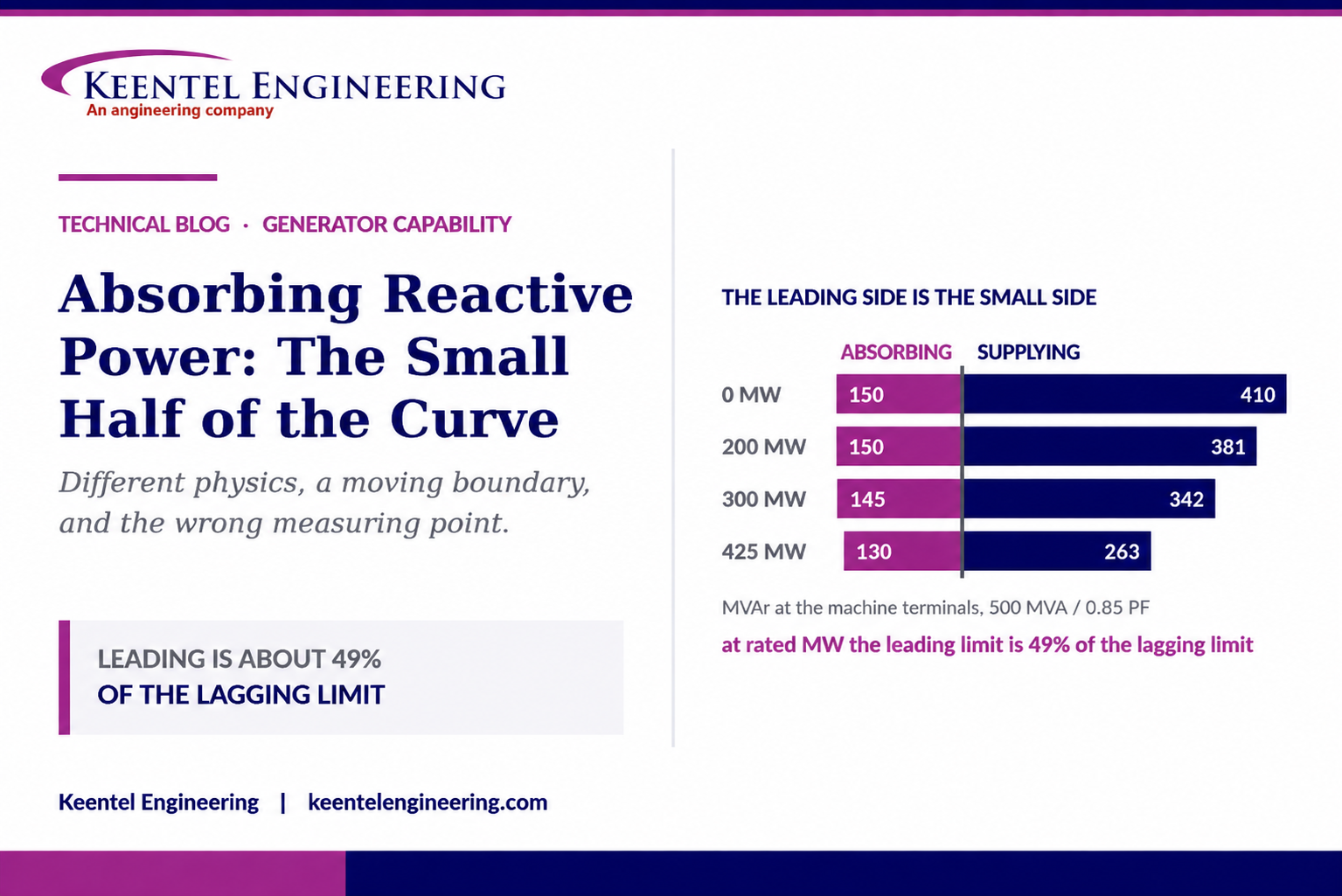
| MOD-025 | GO | Verification and reporting of real and reactive power capability | Test plans, test data, capability curves and submittals to the Transmission Planner |
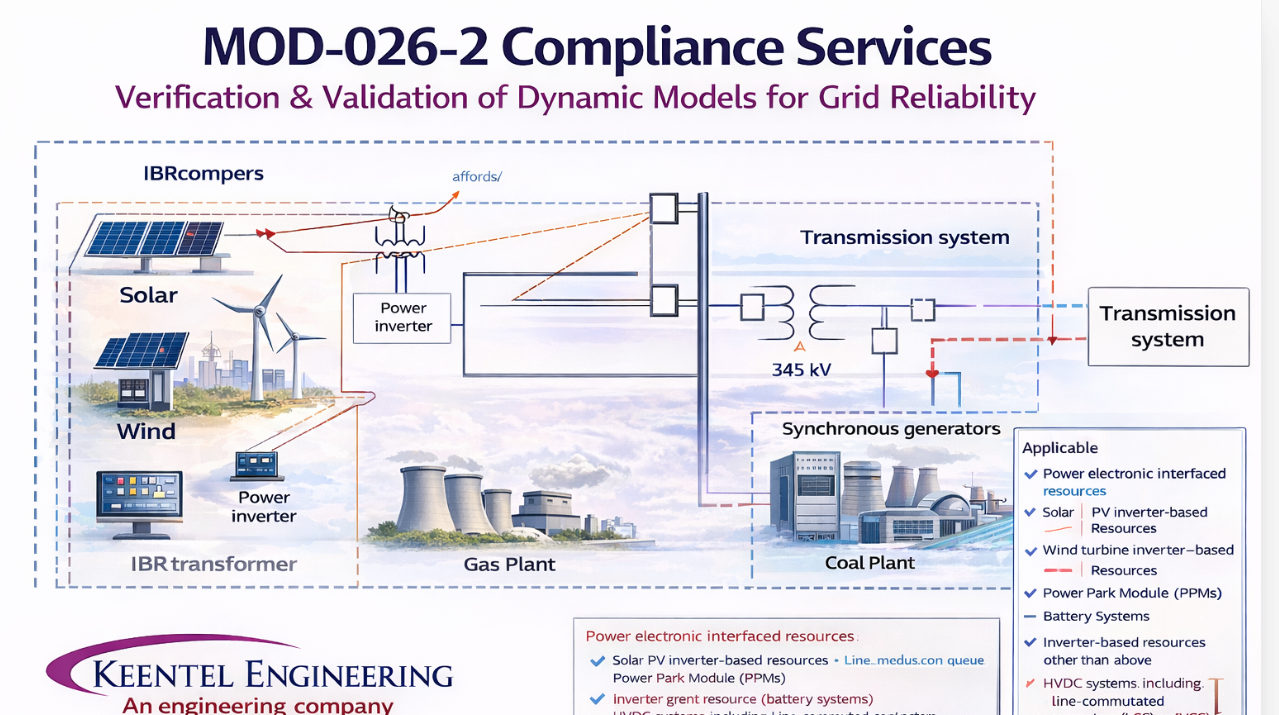
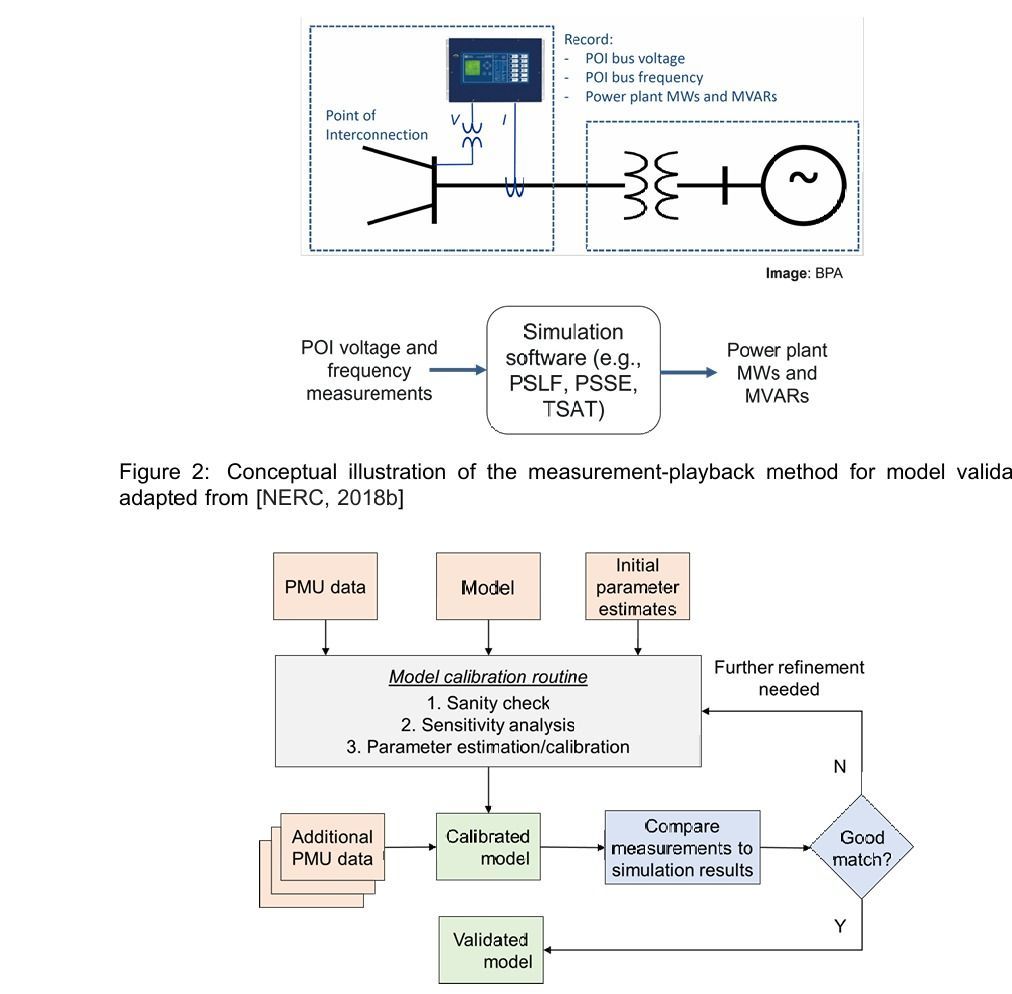
| MOD-026 | GO | Excitation or plant volt/var control model verification | Model verification reports, parameter lists and simulation-vs-measurement comparisons |
| MOD-027 | GO | Turbine/governor and active power/frequency control model verification | Model verification reports and data provided to the Transmission Planner |
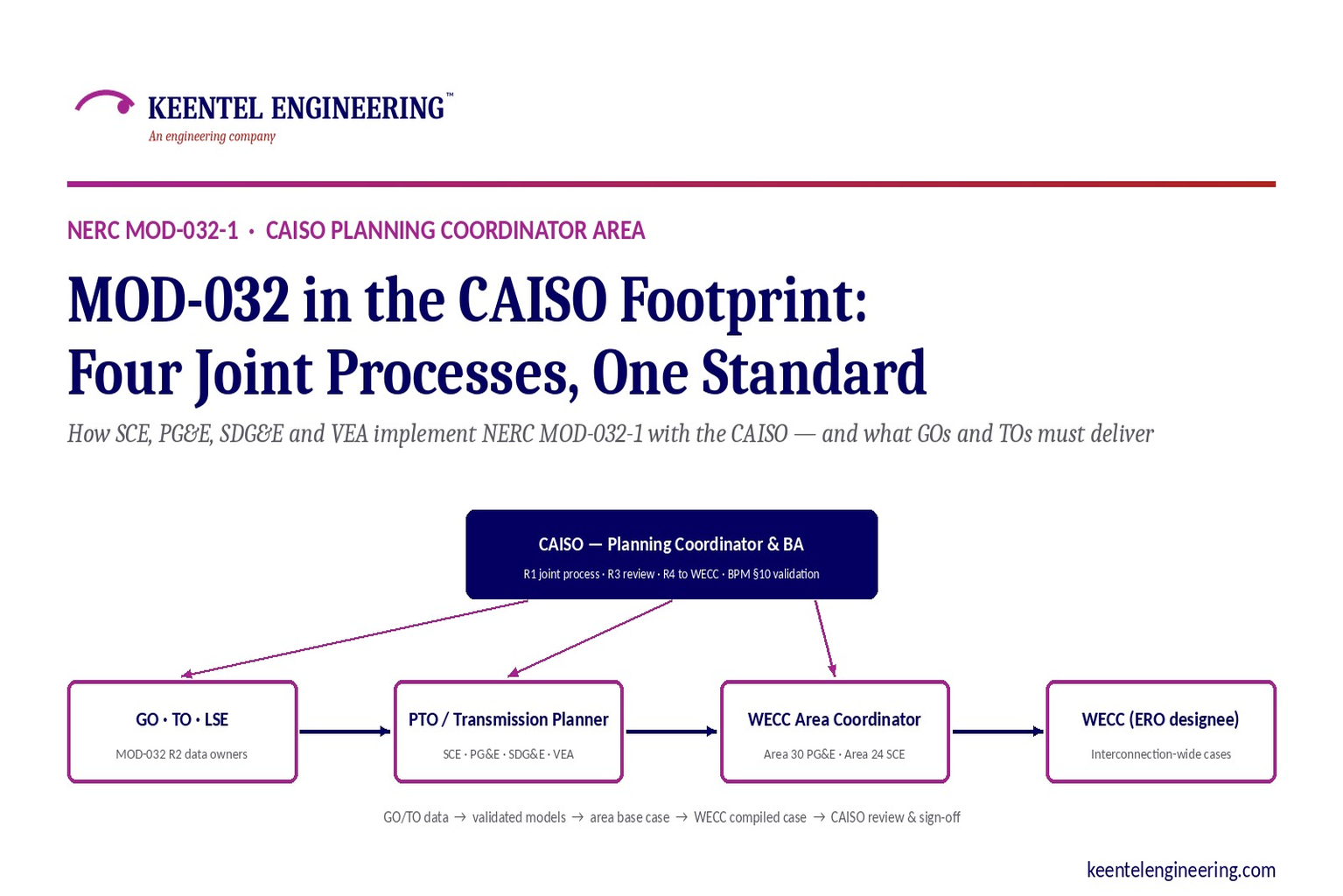
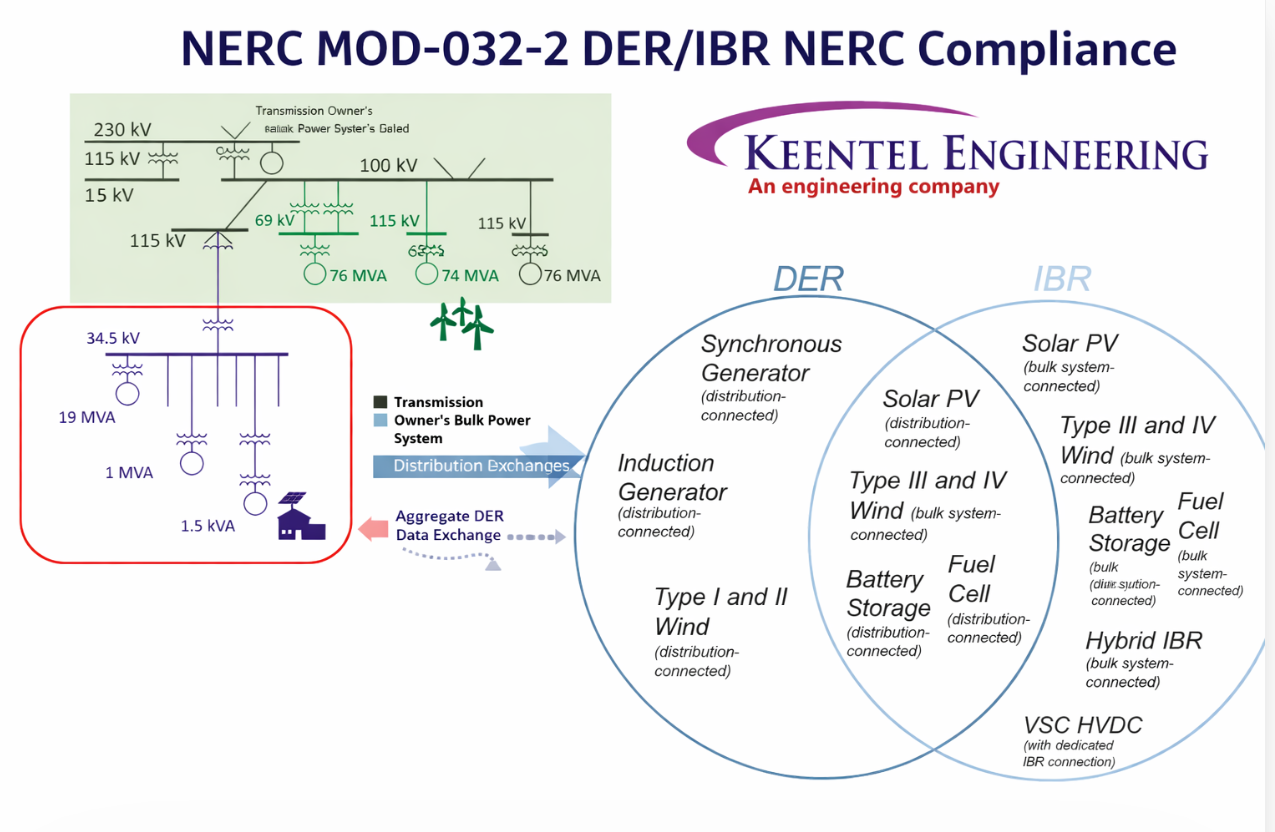
| MOD-032 | GO | Steady-state, dynamic and short-circuit modeling data for planning | Data submissions meeting each PC and TP’s published requirements, including EMT models where required |
| FAC-001 | GO (applicable) | Facility interconnection requirements, for a GO that has agreed to study a third-party interconnection to its existing Facility | Documented interconnection requirements and how they are made available |
| FAC-002 | GO | Coordination on studies for new or materially modified Facilities | Study coordination correspondence and data provided to the PC and TP |
| FAC-003 | GO (applicable) | Vegetation management for applicable generator overhead lines beyond the plant fence | Vegetation management program, inspection records and clearance documentation |
| FAC-008 | GO | Facility Ratings for generating unit equipment through the POI | Ratings methodology, equipment-level ratings, most-limiting-element determinations |
| TPL-007 | GO (applicable) | Thermal impact assessments for applicable power transformers under geomagnetic disturbance | Transformer thermal impact assessments using effective GIC flows supplied by the planner |
| EOP-004 | GO / GOP | Event reporting | Event reporting operating plan, annual test or review records and submitted reports |
| EOP-005 | GOP (as applicable) | Participation in system restoration, including Blackstart Resources where designated | Blackstart testing records and restoration-plan coordination |
| EOP-012 | GO | Cold weather preparedness and freeze protection | Cold weather preparedness plans, freeze protection measures, training and corrective action plans |
| VAR-002 | GOP / GO | Generator voltage schedules, AVR status and reactive capability notifications | Voltage-schedule logs, AVR status notifications, GSU tap data and reactive capability |
| COM-001 | GOP | Interpersonal communication capability | Communication capability and alternative communication test records |
| COM-002 | GOP | Communication protocols for Operating Instructions | Three-part communication procedures, training and logs or recordings |
| TOP-003 | GO / GOP | Providing data to the TOP and BA per their data specifications | Data specification responses and delivery records |
| IRO-010 | GO / GOP | Providing data to the Reliability Coordinator per its data specification | Data specification responses and delivery records |
| PER-006 | GOP | Training operating personnel on the plant’s Protection Systems and controls | Plant-specific training content, attendance and delivery records |
| BAL-001-TRE | GO / GOP (Texas RE) | Primary frequency response in the ERCOT Interconnection | Governor settings, frequency-response performance data and event reviews |
Other standards — for example PRC-012 for Remedial Action Scheme owners or PRC-006 obligations identified by a Planning Coordinator — may apply to specific facilities. Our applicability matrix captures them where they do.
Function, BES and Category 2 determinations, JRO/CFR structuring support and a requirement-level applicability matrix for every plant.
PRC-019, PRC-024, PRC-025, PRC-026 (where applicable), PRC-027 and PRC-029 evaluations performed by our protection engineers, with calculations the auditor can follow.
PRC-005 component inventories, interval selection, test-record review and Unresolved Maintenance Issue tracking.
MOD-025 test planning and review, MOD-026 and MOD-027 model verification, MOD-032 data packages and EMT model review in PSS®E, PSLF and PSCAD™.
FAC-008 methodologies and equipment-level ratings from the generator terminals through the main power transformer and gen-tie to the POI.
PRC-002 and PRC-028 recording design, clock synchronization and data retention for synchronous and IBR plants.
VAR-002, COM-001, COM-002, EOP-004, TOP-003 and IRO-010 procedures and PER-006 training for plant and remote operators.
EOP-012 cold weather preparedness plans, freeze protection documentation and corrective action tracking.
We confirm which entity holds GO and GOP for each plant, the Regional Entity, and every applicable requirement with its effective date.
One-lines, relay settings, test reports, OEM models, capability curves and interconnection agreements — recovered from EPCs, OEMs and O&M providers where needed.
Our engineers check that settings, models, ratings and test data reflect the installed equipment and current firmware, not the design-stage assumptions.
We perform the missing setting evaluations, coordination studies, model verifications, ratings and data submissions.
Procedures, responsibility matrices, training and logs for the GOP — including third-party operations centers.
Evidence is indexed by requirement and kept current through a compliance calendar, change triggers and periodic reviews.
| Deliverable | Purpose |
|---|---|
| GO/GOP applicability matrix | Every applicable requirement by plant and function, with effective dates and the basis for each decision |
| Responsibility matrix | Named owner for each requirement across the GO, GOP, O&M provider and any remote operations center |
| Protection setting evaluations and studies | PRC-019, PRC-024, PRC-025, PRC-027 and PRC-029 calculations and conclusions, signed by the responsible engineer |
| Model verification reports and data packages | MOD-025, MOD-026, MOD-027 and MOD-032 evidence ready for the Transmission Planner and Planning Coordinator |
| Facility Ratings documentation | FAC-008 methodology and equipment ratings database with most-limiting-element results |
| Operating procedures and training | VAR-002, COM, EOP-004 and data-provision procedures, plus PER-006 training content |
| Requirement-indexed evidence binder | Evidence and narratives organized for audits, spot checks and self-certifications |
| Gap | Why it matters |
|---|---|
| Settings evaluated at design, never after commissioning | Field changes, firmware updates and inverter replacements leave PRC-024, PRC-025 and PRC-029 evaluations describing a plant that no longer exists. |
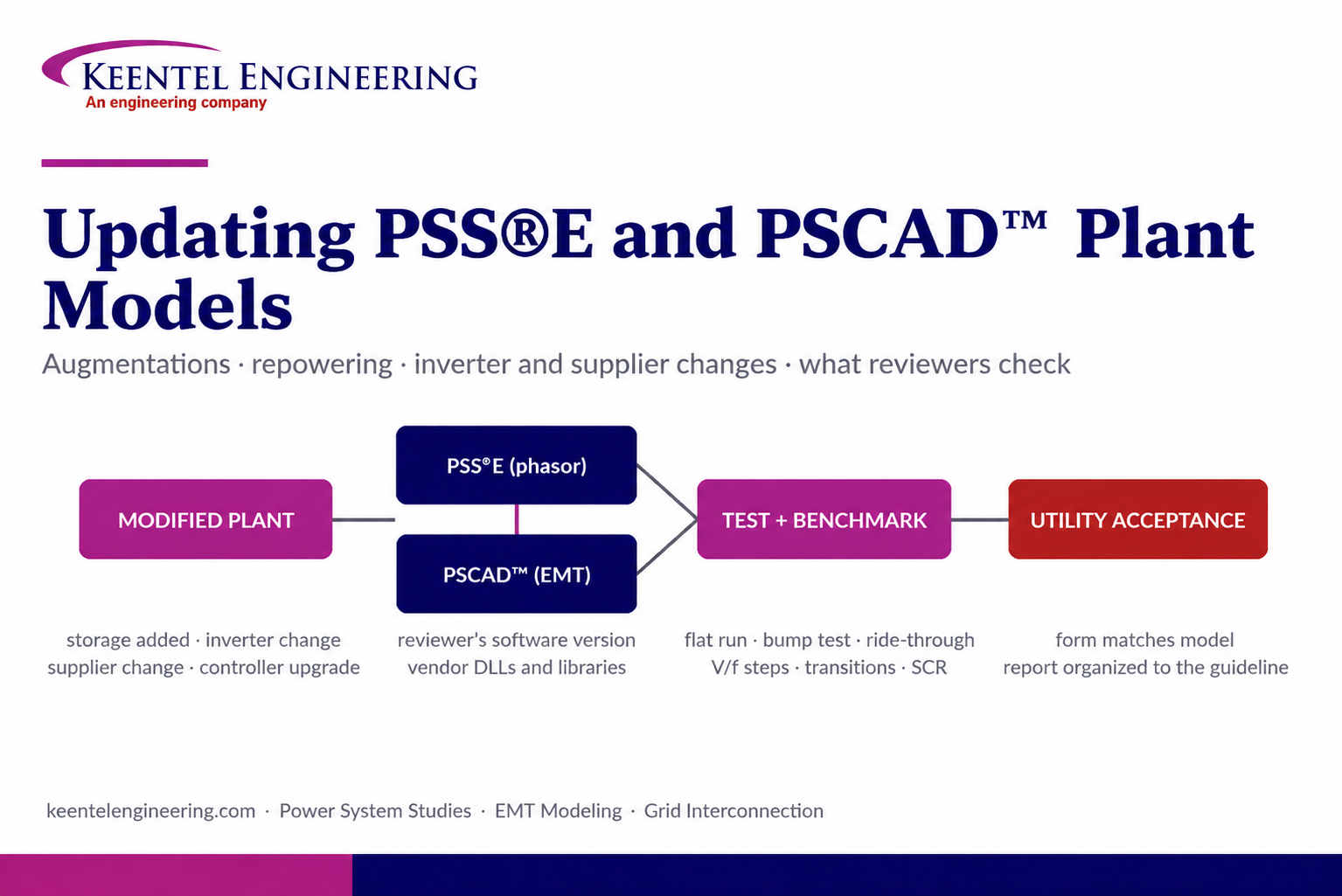
| Models not updated after plant changes | Controller tuning, augmentation and repowering change behavior; MOD-026, MOD-027 and MOD-032 evidence has to follow. |
| Evidence held by the EPC or OEM | Test reports, settings files and models often never transfer to the owner at COD. |
| Unclear GO/GOP split | When an affiliate or O&M provider operates the plant, nobody is sure who owns VAR-002, COM-002 or EOP-004 evidence. |
| Incomplete PRC-005 inventory | Missing DC supply, communications or sudden pressure relay components mean missed intervals. |
| Ratings that stop at the generator | FAC-008 ratings must cover the equipment through to the POI, including the main power transformer, gen-tie and switching equipment the GO owns. |
| Cold weather plans without follow-through | EOP-012 evidence needs implemented freeze protection and tracked corrective actions, not just a plan document. |
The 2026 ERO Enterprise CMEP Implementation Plan names the following O&P requirements under risk elements that commonly touch GO/GOP registrations. Requirement numbers are quoted as listed in the plan; not every listed requirement applies to every GO or GOP, so confirm applicability for your functions and facilities.
| Risk element | Standards & requirements named | What it means for GO/GOP |
|---|---|---|
| Grid Transformation | MOD-025-2 R1–R3; MOD-026-1 R2, R6; MOD-027-1 R5; MOD-032-1 R1–R4 (Category 2 IBRs from May 15, 2026) | Capability testing, model verification and planning data — including newly registered Category 2 IBRs |
| Grid Transformation | PRC-024-3 / PRC-024-4 R1, R2 (PRC-024-4 effective Oct 1, 2026); PRC-027-1 R1–R3; PRC-005-6 R3, R5 | Ride-through settings tracked by version and unit; coordination and maintenance evidence |
| Grid Transformation | FAC-001-4 R1, R2; FAC-002-4 R1, R2 | Applicable GOs’ interconnection requirements and study coordination for new or modified Facilities |
| Facility Ratings | FAC-008-5 R6 | Ratings consistent with the documented methodology for equipment the GO owns |
| Extreme Weather Response | EOP-012-3 R1, R3–R7; FAC-003-5 R6; EOP-011-4 R1, R2, R3, R6 | Cold weather preparedness and corrective actions; vegetation inspections for applicable GO lines; operating plans set by TOP, BA and RC that the GOP must support |
| Communication Protocols | COM-002-4 R1, R4, R5, R7; IRO-001-4 R1 | Named requirements mainly address issuers of Operating Instructions; GOPs should confirm their own receipt-side and compliance obligations are documented |
The aggregation-of-control concern is aimed squarely at generation. If a third-party center operates your plant, 2026 is the year to make responsibilities and evidence ownership unambiguous.
Protection, modeling, ratings and studies are performed by our own power-system engineers under the direction of Sandip R. Patel, P.E., with 30+ years of experience.
From excitation and governor models to plant controllers, inverter ride-through and EMT models in PSCAD™.
Former NERC audit-team leadership and subject-matter experts help us build evidence the way a Regional Entity reviews it.
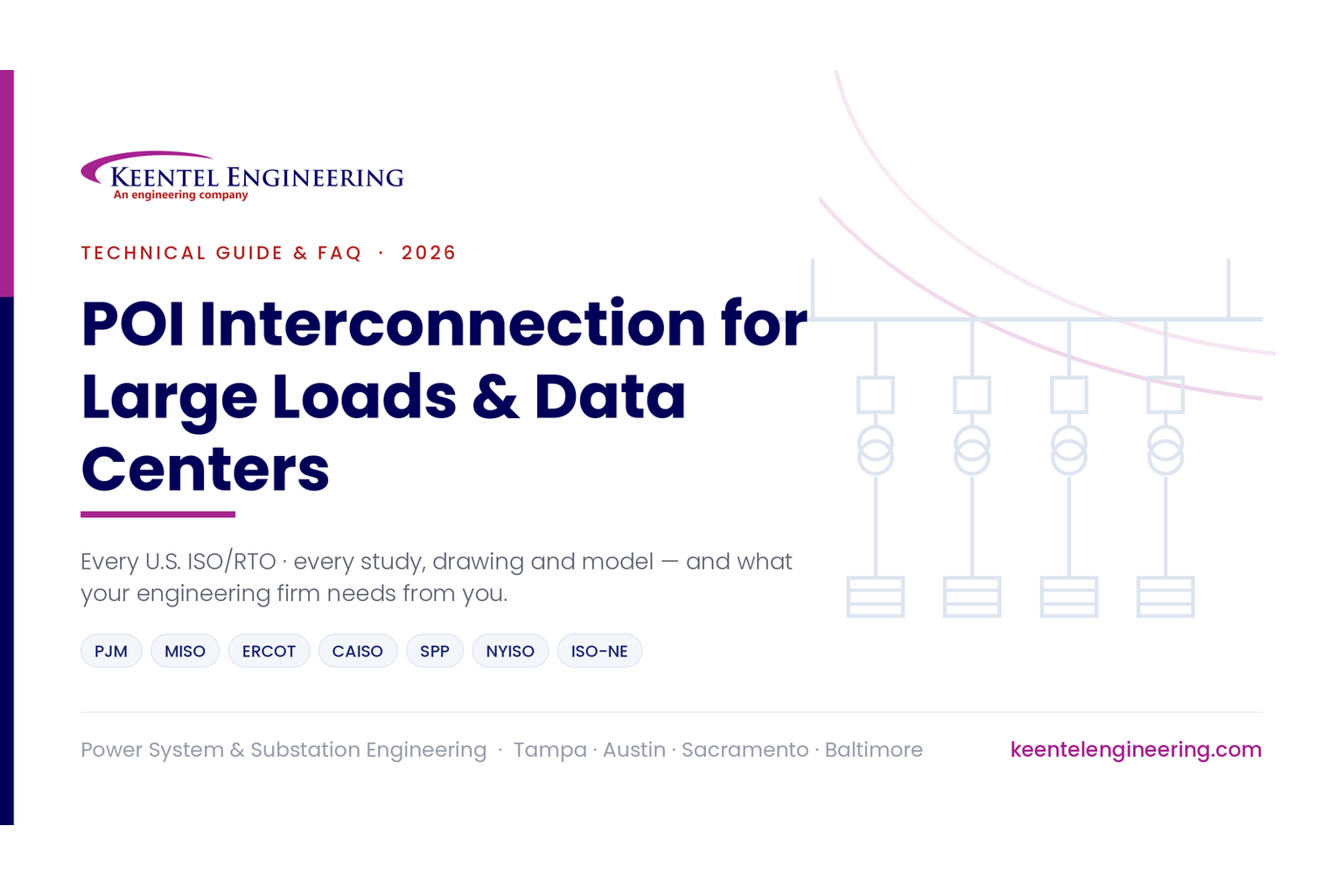
POI interconnection engineering, substation and gen-tie design and system impact studies across all six Regional Entities.
Tell us your plants, technologies and who operates them. Keentel will confirm applicability, verify the engineering and build GO and GOP evidence your Regional Entity can follow.
Serving utilities, EPCs, developers, and infrastructure organizations supporting critical power systems nationwide.