Audit report review
Item-by-item review of the draft and final report against the evidence record, with a classification and recommended response for each item.

Your Trusted Partner in Electrical Engineering and Power Systems
At Keentel Engineering, we deliver electrical power engineering services built on 30 years of experience and a commitment to excellence. Our clients include utilities, developers, EPCs, and public agencies across the U.S.
Unlike firms that sacrifice technical depth to chase billable hours, we prioritize precision, compliance, and value engineering. From transmission services and relay modeling to winterization and SCADA planning, we never compromise on quality.

At Keentel Engineering, we take pride in being the go-to electrical power engineering firm for power and utility system planning, substation design, protection, control, and power system analysis. The following attributes distinguish our team in utility-grade substation engineering and compliance-driven project delivery.
With three decades of hands-on project delivery, we bring unmatched expertise in substation layout design, substation electrical and civil engineering, relay protection, and grid-tie solutions. Our experience includes projects in complex terrain, urban retrofit environments, and utility-scale renewable integrations.
Our engineering process applies AutoCAD 3D, BIM modeling, and system-level substation design practices to ensure accurate planning, reduced errors, and efficient coordination across all project stakeholders.
Our workflow includes 3D substation design, enabling clash-free coordination between structural, electrical, and civil disciplines.
From grounding grid studies to relay protection settings, we engineer every detail to improve system reliability, performance, and operational safety. Our rigorous QA/QC process ensures compliance with IEEE, NFPA, and ISO/TSO interconnection standards.
Among leading electrical substation design companies, Keentel Engineering stands out for 30+ years of proven high-voltage and utility-grade project delivery.



First name, email and what you're interested in are all we need to get moving. Everything else, including drawings or an RFP, is optional.
Most compliance teams put their energy into the months before an audit and the week of fieldwork. The period after the report arrives gets less attention — yet it is where findings are resolved, where process weaknesses are fixed, and where the foundation for the next audit is laid.
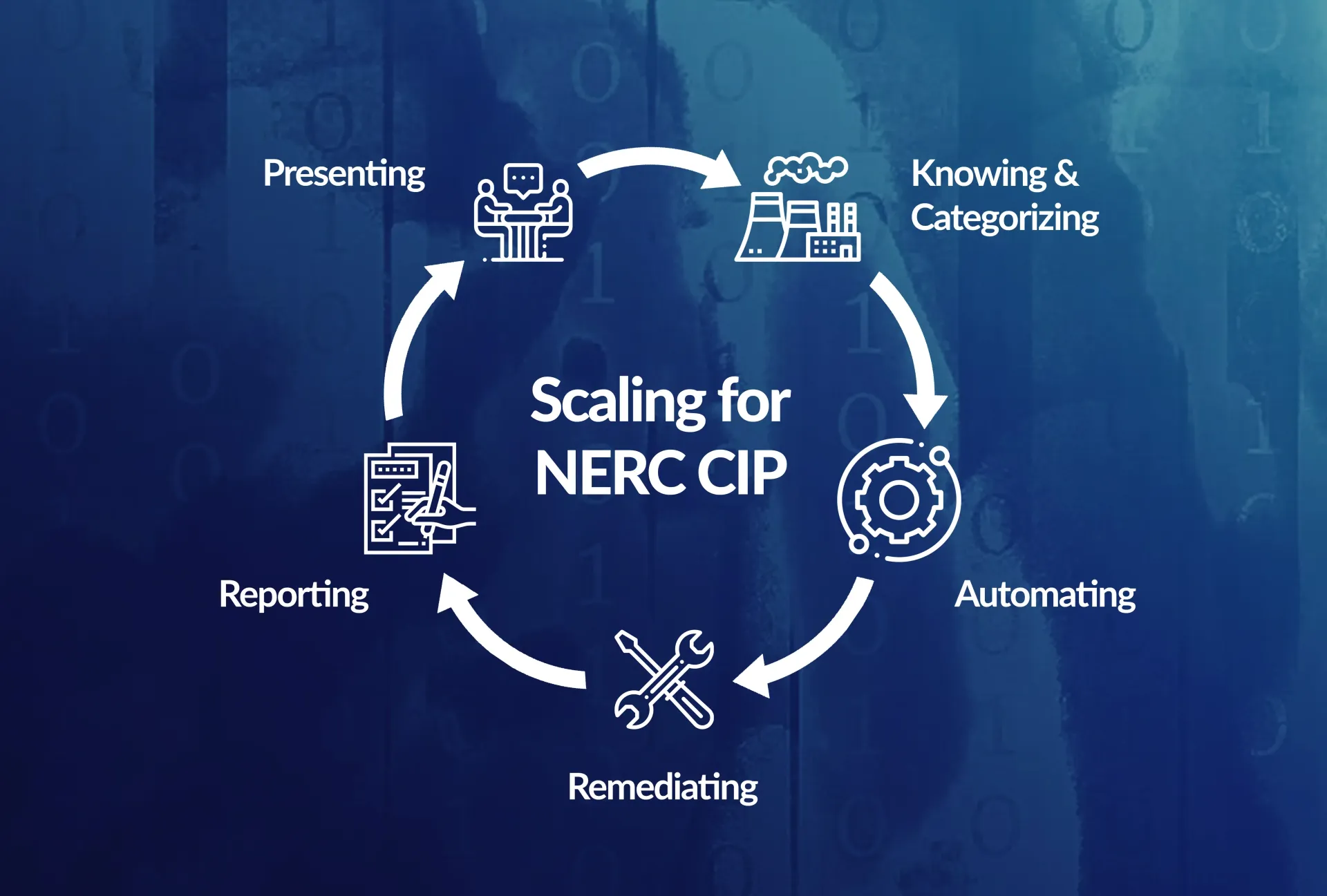
Keentel treats the audit as a continuous cycle. Readiness work identifies gaps early; audit support presents engineering evidence clearly; post-audit remediation fixes the causes behind what was found; and those lessons feed the program so the next audit starts from a stronger position.

This page summarizes pre-audit and during-audit support and focuses on the post-audit phase. For full detail on the earlier phases, see Mock Audit & Pre-Audit Readiness and NERC Compliance Audit Support.
| Phase | Typical activities | Keentel support |
|---|---|---|
| Pre-audit | Scope review, evidence preparation, RSAW narratives, mock audit, SME preparation | Mock audits, gap closure and RSAW evidence — see Mock Audit & Pre-Audit Readiness and RSAW Evidence Development |
| During the audit | Evidence requests, interviews, technical explanations, follow-up requests | Technical support for engineering evidence and SMEs — see NERC Compliance Audit Support |
| Draft report | Entity review of the draft report for factual accuracy | Review against the evidence record and requirement language; help drafting comments |
| Final report | Potential noncompliance, areas of concern and recommendations formally documented | Classification of every item and a remediation plan for each |
| Remediation | Mitigation, corrective action plans, program improvements | Root cause, extent of condition, engineered corrective and preventive actions |
| Closure and next cycle | Completion evidence, program updates, readiness for future monitoring | Completion packages and lessons carried into the program and calendar |
An audit report can contain several kinds of items, and they do not carry the same weight. Treating an area of concern as if it were a violation wastes effort; treating a potential noncompliance as a suggestion is a serious mistake. We help your team classify each item correctly and respond in proportion.
The draft report is your opportunity to identify factual errors or omissions before it is finalized. We review it against the evidence you submitted and the requirement language, and help you prepare clear comments where the record is incomplete or inaccurate.
| Item | What it generally means | Typical response |
|---|---|---|
| Potential noncompliance | The audit team found evidence that a requirement may not have been met; the item proceeds through the enforcement process | Mitigation addressing root cause and extent of condition, supported by completion evidence |
| Area of concern | A concern about a practice or condition that is not identified as noncompliance but may present risk | Evaluate the underlying risk and address it through program or control improvements |
| Recommendation | A suggestion from the audit team to improve a practice, process or control | Consider and document a decision; implement where it strengthens the program |
| No finding or positive observation | The requirement was assessed and no issue was identified | Preserve the evidence approach so it can be repeated next time |
Areas of concern and recommendations are not findings of noncompliance — but they often point to exactly where the next issue will appear. Addressing them now is inexpensive prevention.
Item-by-item review of the draft and final report against the evidence record, with a classification and recommended response for each item.
Analysis of why each issue occurred and whether it exists at other devices, units, sites or time periods.
Engineered corrective and preventive actions with owners, dates and defined completion evidence.
Mitigation plan or mitigating-activity content and evidence for potential noncompliance — see NERC Align & Mitigation Planning for Align and SEL detail.
The underlying technical work: settings corrections, rating reviews, model updates, maintenance program fixes and study updates.
Procedure, internal-control and calendar changes that address areas of concern and recommendations.

Audits test samples. If the auditor found one relay with incorrect settings, one missed maintenance interval or one rating that did not reflect the most limiting equipment, the same condition may exist in records the audit team never saw. An extent-of-condition review checks every similar device, unit, site and time period, so the remediation covers the whole problem — not just the sampled instance.
This matters for two reasons. It is what a Regional Entity expects mitigation to address, and it protects your organization from finding the same issue again in a later audit, spot check or self-certification.
Compare every item against the evidence record and requirement language; prepare factual comments for your team to submit.
Separate potential noncompliance, areas of concern and recommendations, and agree a response approach for each.
Identify the technical, process and control causes behind each potential noncompliance and significant area of concern.
Check the full population of similar facilities, devices and periods beyond the audit sample.
Define corrective and preventive actions, owners, milestones and the evidence that will close each one.
Complete the engineering work and assemble completion evidence by action and by facility.
Support mitigation completion, update the program and calendar, and brief the team on lessons learned.
For potential noncompliance, mitigation follows the Regional Entity’s process and the NERC Rules of Procedure. For areas of concern, recommendations and internal findings, a corrective action plan gives your organization the same discipline internally. We build both to the same engineering standard.
| Element | Purpose |
|---|---|
| Issue statement | The requirement or concern, the facilities involved and what was observed |
| Root cause | Why it happened — technical, process and control causes, not just the symptom |
| Extent of condition | What else was checked, the method used and what was found |
| Corrective actions | The fix for every affected item, with owners and target dates |
| Preventive actions | The procedure, tool or control change that stops the issue recurring |
| Milestones and evidence | How progress is tracked and what record proves each action is complete |
| Effectiveness check | A later review confirming the preventive control is working as intended |
Regional Entities use risk-based tools such as the Inherent Risk Assessment and Compliance Oversight Plan to shape how each registered entity is monitored. How you resolve audit results — and whether the same issues recur — is part of the record that informs future monitoring.
We help your team turn audit results into lasting program improvements, so the next audit tests a stronger program rather than the same weaknesses:

Former NERC audit-team leadership and SMEs help us read a report the way it was written and respond to what the Regional Entity will look for.
Protection, ratings, modeling and planning engineers deliver the technical remediation — not just the paperwork around it.
Support for audits conducted by MRO, NPCC, ReliabilityFirst, SERC, Texas RE and WECC.
Every action is defined with the record that proves it, so findings close and stay closed.
Whether your audit is coming up or the report just arrived, Keentel will help you prepare, respond and remediate — and close every item with evidence.
Serving utilities, EPCs, developers, and infrastructure organizations supporting critical power systems nationwide.